Let’s be real—traditional boiling works, but it’s a bit lazy, isn’t it? You boil noodles, drain them, then try to glue them to a sauce that slides off like oil on glass. No wonder your grandmother’s “spaghetti sauce” always seemed like soup on the side.
When you cook pasta directly in the sauce, the starch from the raw spaghetti thickens the liquid into a creamy cloak. The noodles drink up the tomatoes, garlic, and herbs as they hydrate. You get a dish where every bite tastes like the sauce, because it is the sauce.
The “sauce-pasta” ratio: Don’t drown it, marinate it
You need enough sauce to cover the dry pasta by about an inch—think of a deep, simmering ragù or a thick tomato batch. Start with about 4 cups of sauce per pound of dry spaghetti. If the sauce is too thin, it will boil away before the pasta is tender. You want a braise, not a flash flood.
Bring your sauce to a gentle simmer first. Then snap your spaghetti in half (I know, the purists will scream—let them). Drop the dry sticks in, stir once, and let them cook low and slow. Stir every few minutes to prevent clumping like a bad high school reunion.
How to know it’s done without a timer
Forget the package directions. After about 8–10 minutes, the sauce will look denser, almost like a thick stew, and the pasta will be tender but still alive in the bite. The liquid level will drop dramatically because the starch absorbs it. Pro tip: If you see the sauce drying out too fast, add a splash of warm water or broth—not cold tap water, you monster.
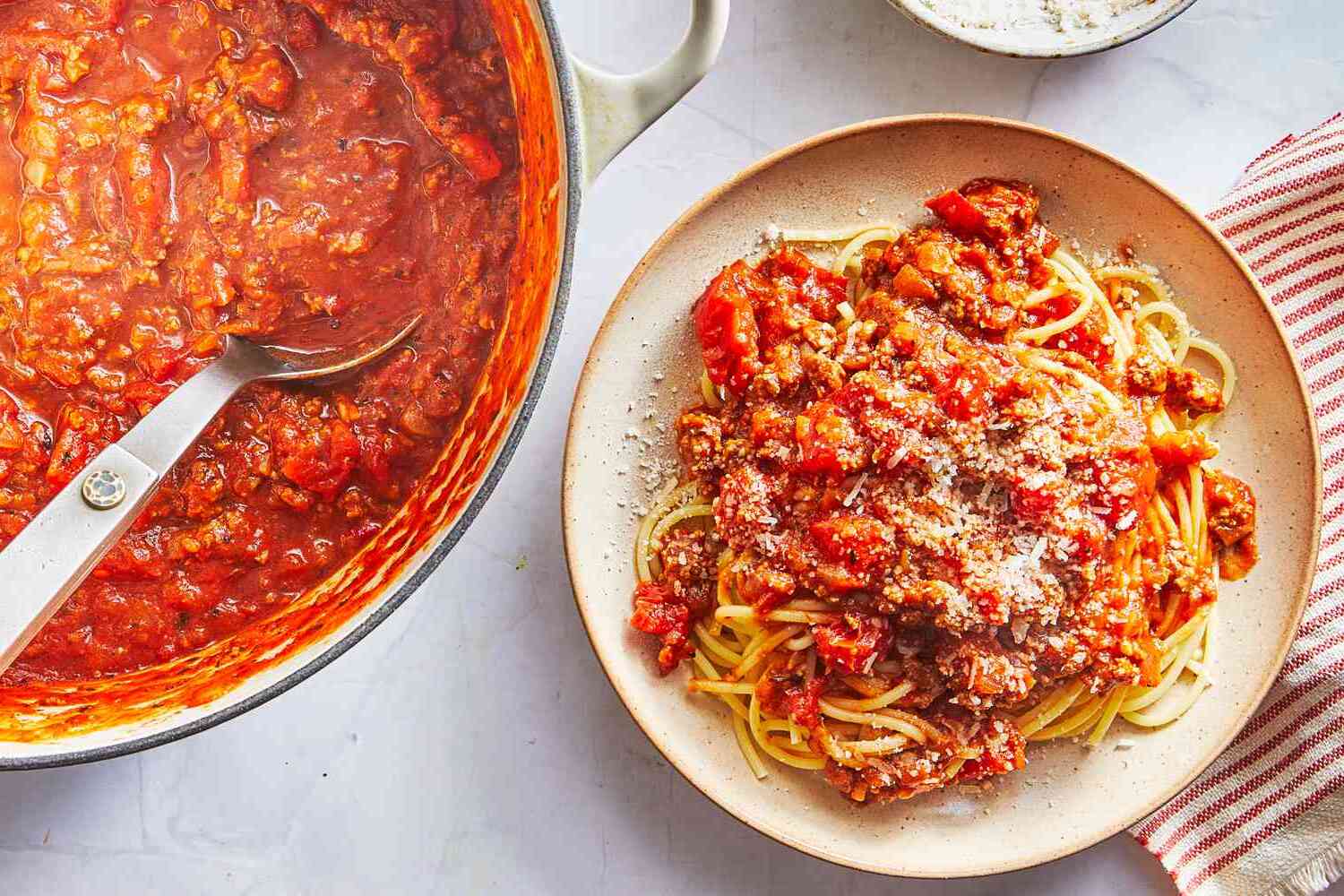 One-Pot Spaghetti with Meat Sauce Recipe | Dirty Dishes Messy Kisses
Plate it directly from the pan. Don’t drain, don’t rinse, don’t even think about olive oil on top. The pasta will continue to absorb the remaining sauce as it sits, so serve it immediately or it becomes a pasta brick.