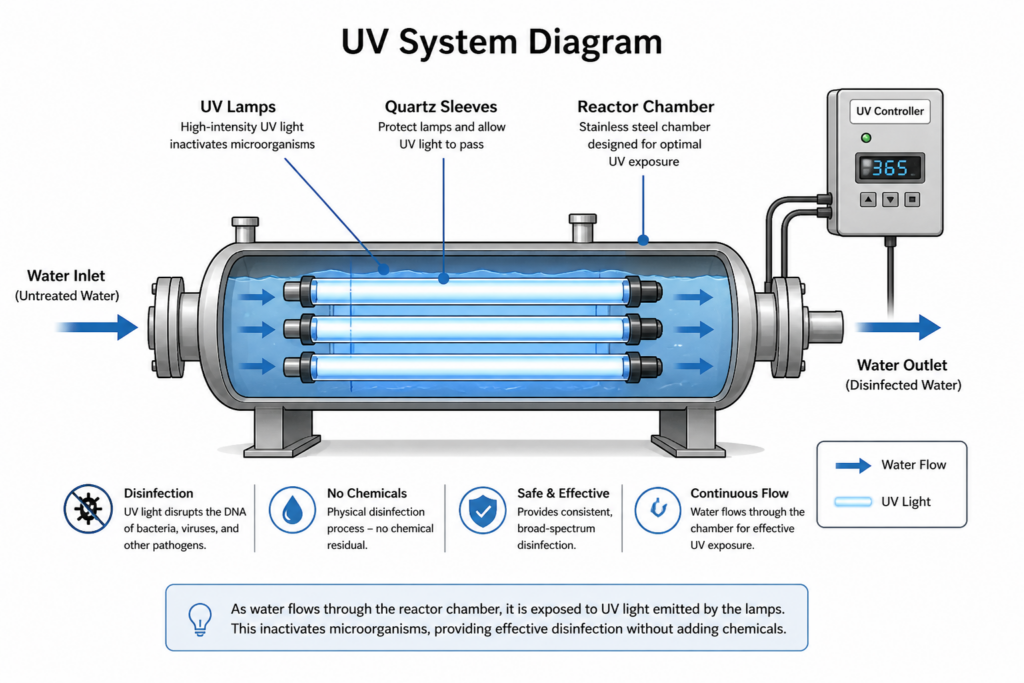
If your water comes out of the tap looking like a diamond, UV is an absolute rock star. It kills 99.99% of bacteria without adding chemicals. No chlorine taste, no weird plastic aftertaste—just pure, crisp, disinfected water. It’s the James Bond of water treatment: sleek, effective, and only works well when everything is already in order.
And here’s the kicker: UV treatment does remove turbidity in a weird, roundabout way. Not by pulling dirt out, but by killing the living gunk. Algae blooms and certain bacteria can make water look hazy. When the UV zaps them dead, they might settle to the bottom. So, technically, the water clears up—but only if the turbidity was alive. You’re not removing mud; you’re committing microbial murder that happens to improve the view.
The Final Verdict (No Jargon, Just Gossip)
Does UV remove turbidity? Nope. It’s like asking if your toaster can vacuum the carpet. It can’t. But in the grand scheme of water purification, UV is a necessary diva—it just needs a good pre-filter to hold its hair back. If your water looks like a murky swamp, UV will turn it into a sterile murky swamp—safer, but still ugly.
So, next time someone sells you a UV system for cloudy water, laugh politely and walk away. Get a sediment filter first. Or just embrace the swamp aesthetic. Just remember: dirty water + UV light = clean dirty water. And that, my friend, is not what your coffee maker ordered. Stay hydrated, and stay clear.