Okay, here’s the mind-bending part. This little number game shows up in the real world more often than your favorite song on the radio. Think about a sunflower. The seeds in the center are arranged in two sets of spirals—one going clockwise, one counterclockwise. And guess what? The number of spirals in each direction is almost always a Fibonacci number, like 34 and 55.
Isn’t that a little weird? It’s not just flowers, either. Pinecones, pineapples, and even the petals on a rose often follow the sequence. A lily has 3 petals, a buttercup has 5, a chicory has 21. It’s like nature decided to use the same cheat code over and over again because it works.
Even your own body is in on it.
Look at your hand. Seriously, hold it up. You have five fingers. Each finger has three segments (except the thumb, which has two). That’s 5 and 3 and 2—all Fibonacci numbers. Your arm? The ratio of your forearm to your hand is often close to the famous Golden Ratio, which is directly tied to this sequence.
It almost feels like the universe is winking at us, right? Like, “Hey, I’m just repeating this one neat trick.” And the best part? Nobody fully knows why plants and animals use it so much. Scientists think it’s the most efficient way to pack seeds or grow leaves, but it still feels a little magical.
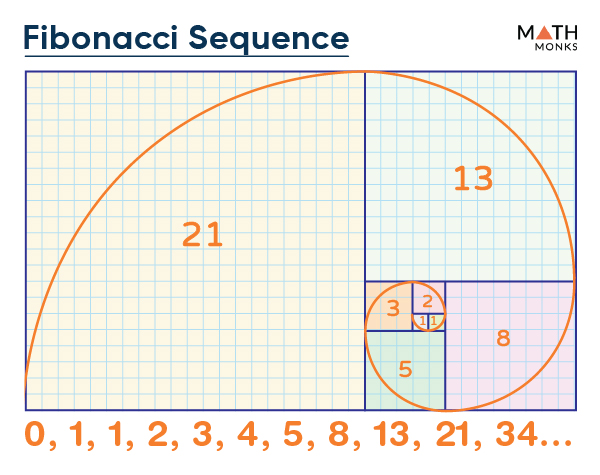 5 Interesting Facts About Fibonacci Numbers – JQMCLV