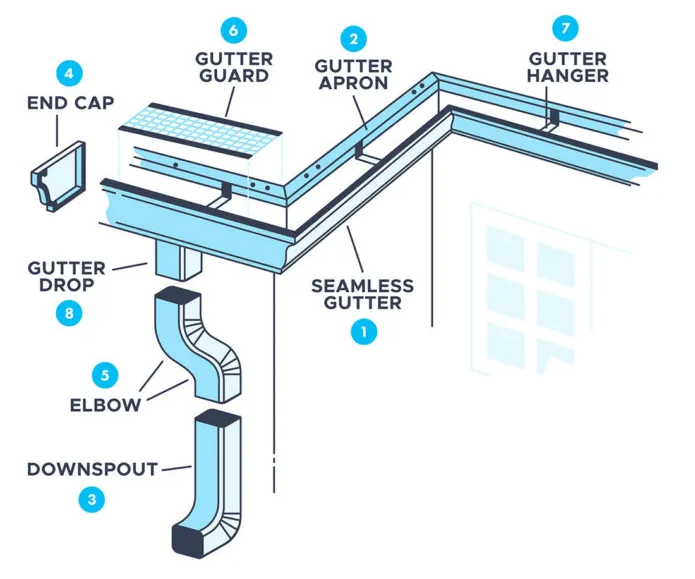
Before you drive a single screw, measure your roof’s edge with a tape measure. This sounds obvious, but so many folks eyeball it and end up with gutters that are either too short or comically long. You’ll want a slight downward slope—about ¼ inch for every 10 feet—toward the downspout. Too flat, and water sits and breeds mosquitoes. Too steep, and it looks like your house is trying to launch water rockets. If math makes you twitch, buy an extra 10 feet of gutter; you can always cut it down. (Or hire a neighbor’s kid who aces geometry. Just offer pizza.)
Choosing the Material: Aluminum vs. Vinyl vs. Steel
You’ll find three main contenders at the hardware store. Aluminum is the crowd favorite: light, rust-proof, and easy to cut with tin snips. Vinyl is cheaper and DIY-friendly, but it gets brittle in freezing weather—I had a friend whose vinyl gutter snapped like a stale cracker during a snowstorm. Steel is tough and dent-resistant, but it rusts if you don’t paint it, and it weighs a ton. My advice? Go with aluminum unless you live in a place where hail is a sport. And please avoid the flimsy plastic snap-together kits; they leak like a sieve after one sunny season.

