
Forget the Hollywood version of whip-cracking slavers. The real builders were seasonal farmers who worked during the Nile’s flood season (when their fields were underwater). They lived in a nearby worker’s village with bakeries, breweries, and even a medical center. We know this because archaeologists found evidence of healed fractures—meaning they got health care after a block crushed their foot.
And they weren’t just grunt workers. Teams were organized into rival groups with names like “Friends of Khufu” and “Drunkards of Menkaure.” Yes, they literally called themselves Drunkards. They competed to see who could drag the biggest rock the fastest. The winning team got extra beer. The losing team? Still got beer. It’s a miracle any pyramid got built without everyone passing out.
The Surprising Secret: It Wasn’t as Hard as We Thought
Here’s the kicker: the pyramids weren’t built in a vacuum. The Egyptians spent decades experimenting with smaller pyramids. The first attempt, the Step Pyramid, was basically a stack of six smaller boxes. Then they tried the Bent Pyramid, which started too steep, so they had to change the angle halfway—like a construction project where the architect says, “Oops, let’s make it fatter.”
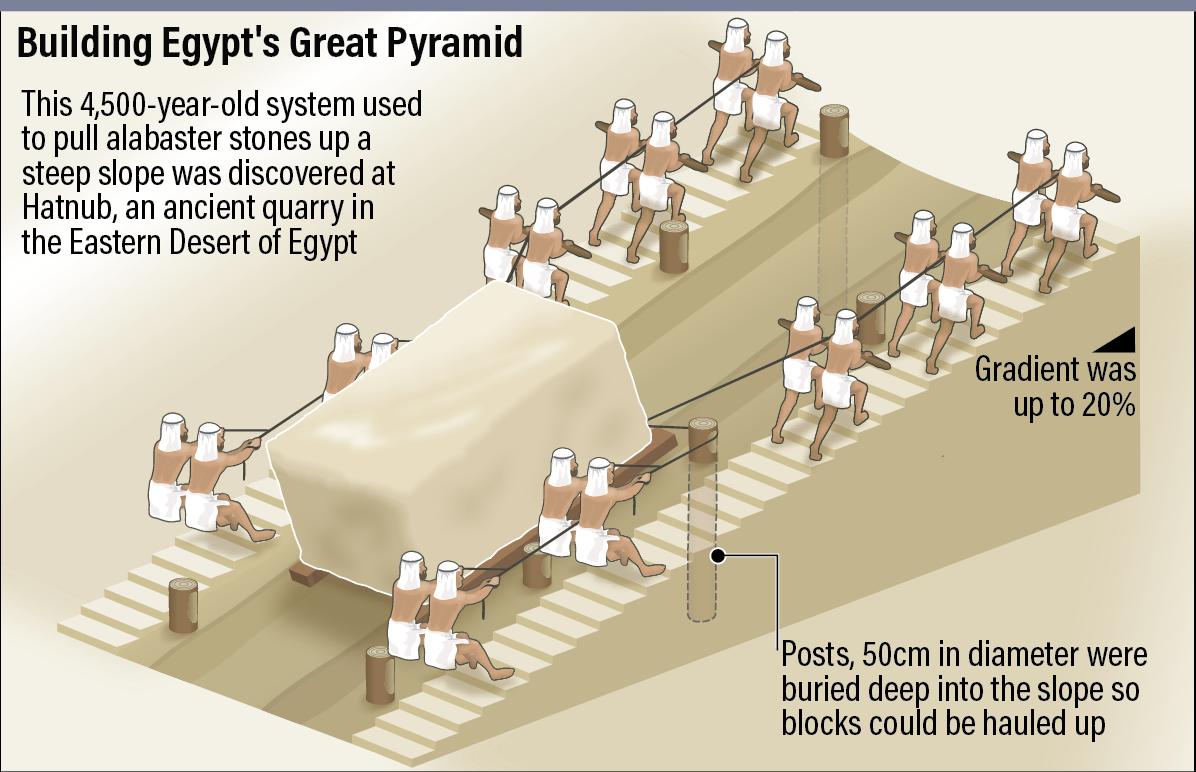 Ancient Egyptian Pyramids Diagram
By the time Khufu’s Great Pyramid came along, they’d been practicing for 200 years. They knew exactly how much beer to budget. The final result? A structure so perfectly aligned that the four sides are within 0.05% accuracy of a perfect square. That’s about as precise as a modern surveyor with a laser—except they used a string and a stick. And stars.
And don’t get me started on the mortar. They used a gypsum-based paste that’s actually stronger than the limestone blocks themselves. The blocks fit so snugly that you can’t slide a credit card between them. Meanwhile, my kitchen counter has gaps you could park a golf ball in.

