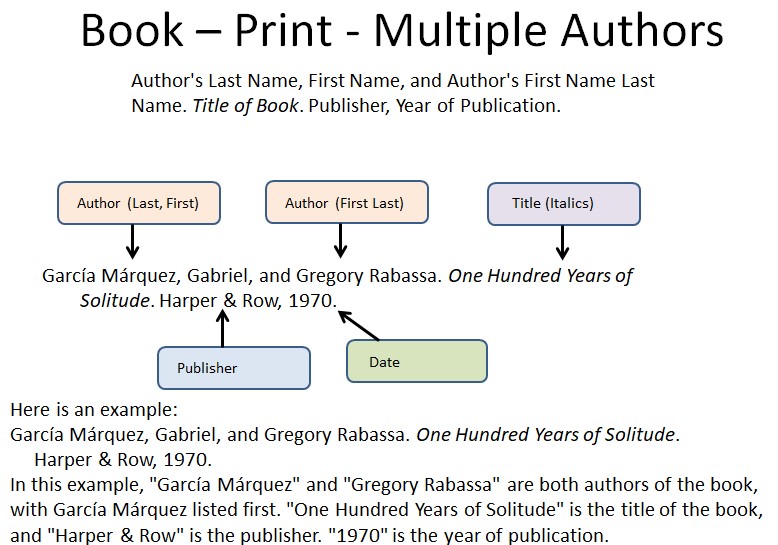
Here’s the big split: two authors versus three or more. For two authors, you just use the word “and.” It’s as easy as ordering a coffee for you and a friend. In-text, you’d write: (Smith and Jones 45). For the Works Cited page, same deal: Smith, John, and Jane Jones. Title. Publisher, year.
But when you hit three or more authors, MLA lets you take a shortcut. You only write the first author’s name, then add “et al.” It’s a Latin phrase meaning “and others.” So instead of listing six people, you write: (Mitchell et al. 102). Boom—you just saved a ton of space.
Why does this rule exist? Honestly, it’s about readability. Imagine a sentence with twenty names stuffed into parentheses. It’d look like a chaotic party invite. “Et al.” keeps your writing clean and your reader focused on your point, not the guest list.
Wait, What About the Works Cited Page?
Good question! For the full list at the end, you do list all the authors for a source with two or three names. But once you hit four or more? Again, use “et al.” after the first author. Example: Mitchell, Cory, et al. Environmental Science Today. Pearson, 2026. See? It’s like giving credit to the team captain while waving at the whole squad.
But here’s a fun twist: some professors prefer you to list all authors if there are up to five. Always check your assignment guidelines. MLA is a set of rules, but it’s also flexible—like yoga for punctuation. Don’t be afraid to ask for clarity; it’s your research, your rules.

