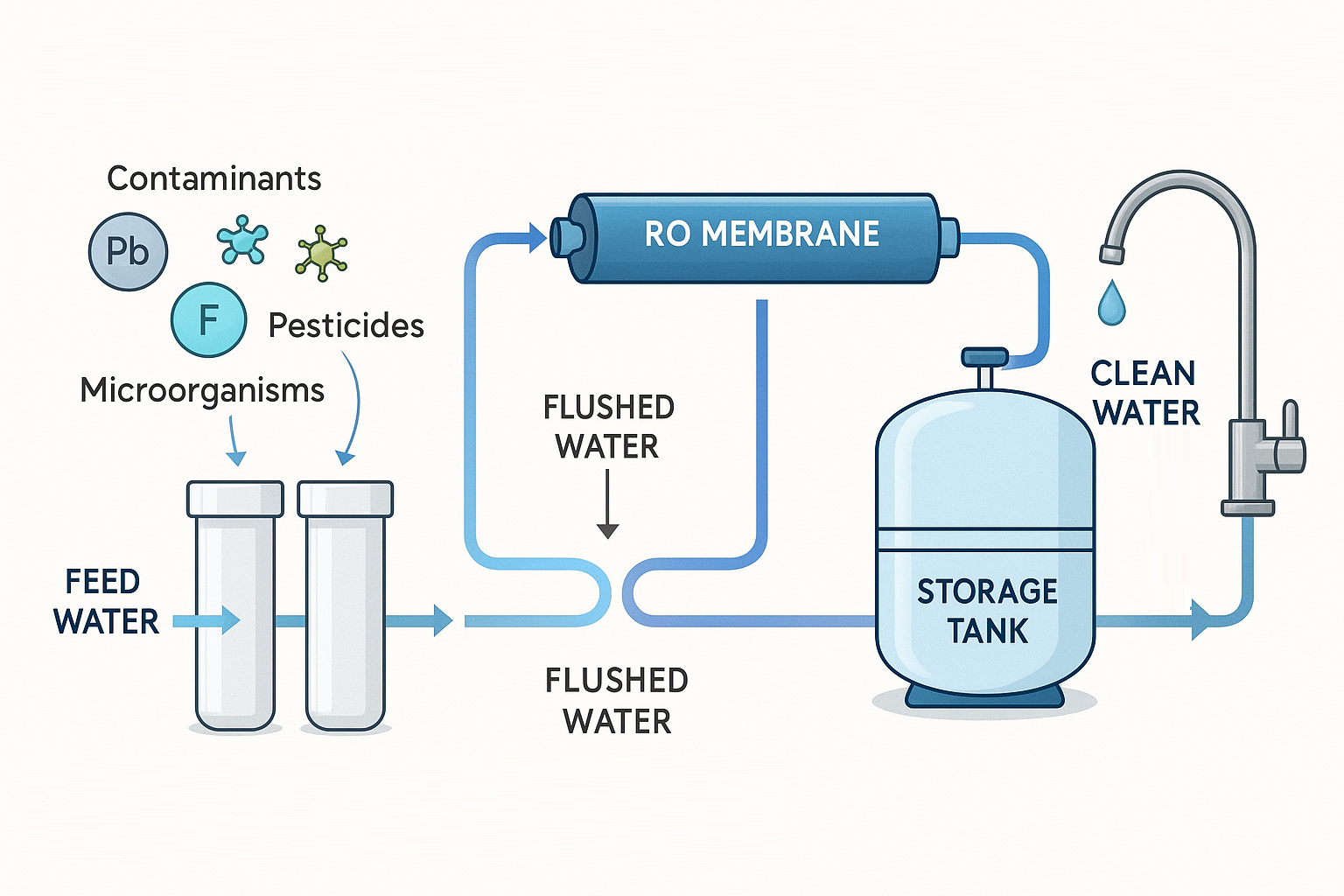
This is where the irony kicks in: reverse osmosis is so good at removing stuff that it even takes out the good stuff. That includes calcium and magnesium—those minerals that make water taste “mineral-rich” or help your body function. Most RO systems remove 90-99% of total dissolved solids, which is great for removing lead and pesticides, but not so great if you’re trying to get your daily dose of electrolytes.
That’s why some systems include a remineralization filter at the end, adding back those beneficial minerals. It’s like the system saying, “Oops, I took everything out—here, have some of these back.” And no, you don’t need to worry about “dead” water—that’s just a myth from fancy water bottle brands.
The Water Waste Drama
Here’s the dirty secret of reverse osmosis: it’s a bit of a water hog. For every gallon of clean water you get, the system might flush away 3 to 5 gallons of “concentrate” (aka the nasty leftovers). That’s a lot of water going down the drain—unless you have a modern RO system with a permeate pump or a zero-waste design. Pro tip: don’t install an RO system if you live in a drought zone without checking the specs first.
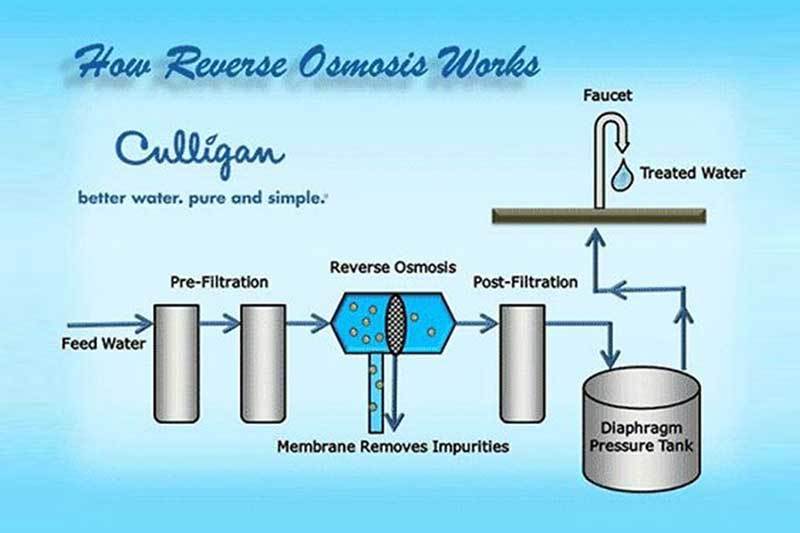 What is Reverse Osmosis System | how does it work? Buy water filter
But don’t panic—this isn’t a dealbreaker. Many systems now recycle that leftover water for tasks like watering plants or washing dishes. Your succulents won’t know the difference.

