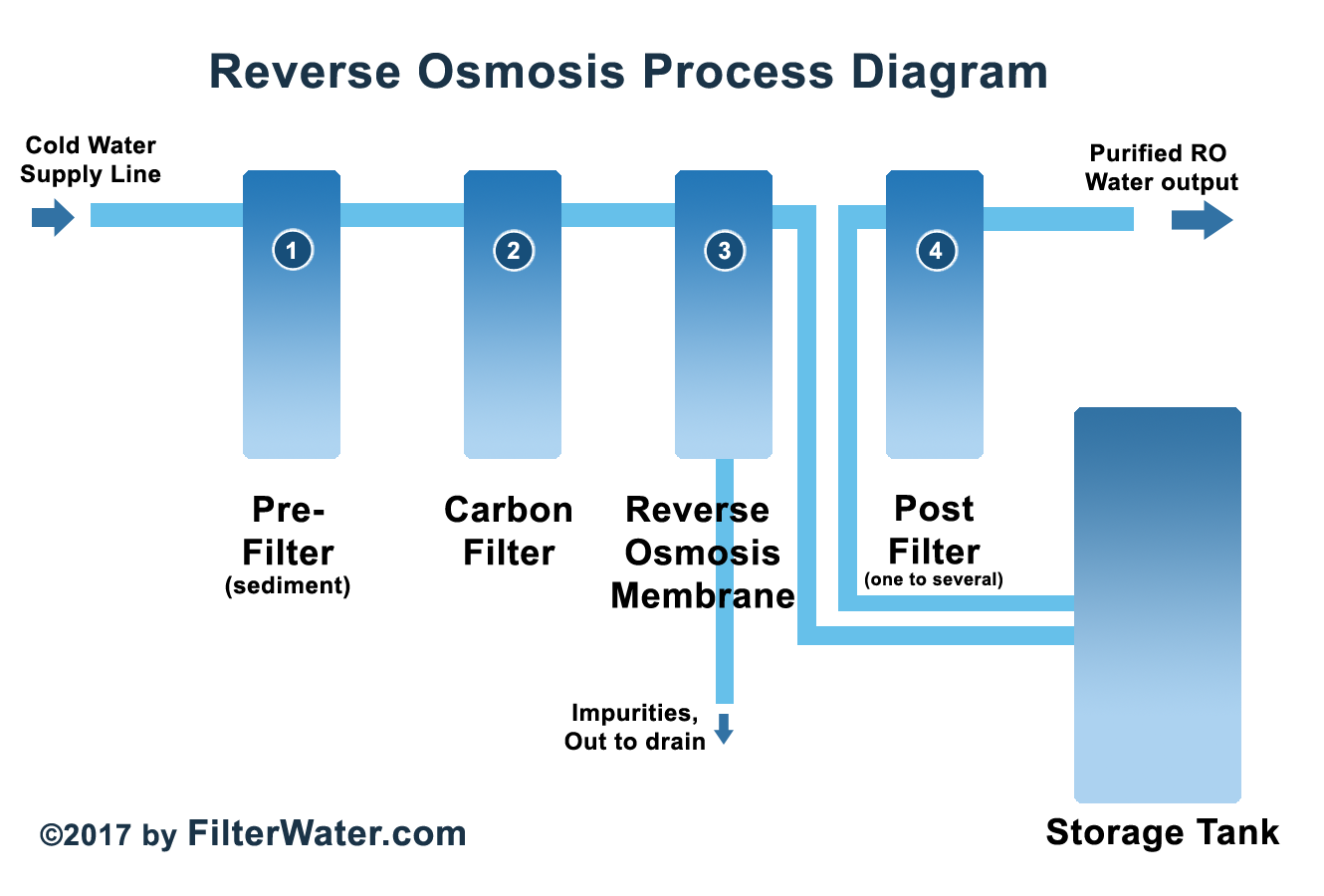
To actually do reverse osmosis at home, you don’t need a degree in chemistry or a secret government lab. You need a reverse osmosis system, which is basically a fancy collection of filters and a tank that looks like it belongs on a spaceship. You can buy one for under $200—or, you know, make friends with someone who has one. I won’t judge.
The main parts are: a sediment filter (catches sand and grit, like a doorman for dirt), a carbon filter (removes chlorine taste, because nobody wants pool water in their coffee), the RO membrane (the star of the show), and a storage tank. It’s like a nerdy water band, and each member does their part.
Step 1: Feed It Water (But Not Too Fast)
First, you connect your RO system to your cold water line. Do not connect it to the hot water line unless you want to make reverse osmosis soup. Hot water can damage the membrane, and then you’ll just have expensive, lukewarm sadness.
Turn on the water supply, and let the system do its thing. It goes through the sediment filter first, which catches big particles like a bouncer catching a fake ID. Bouncer says, “You’re not getting in, gravel.”
Step 2: The Carbon Filter Cleanse
Next, water flows through a carbon filter, which is like a spa day for your H₂O. It removes chlorine and bad tastes, leaving the water feeling refreshed and emotionally ready for the membrane. Water goes in tasting like a swimming pool, comes out tasting like a mountain spring—okay, maybe a fancy mountain spring.
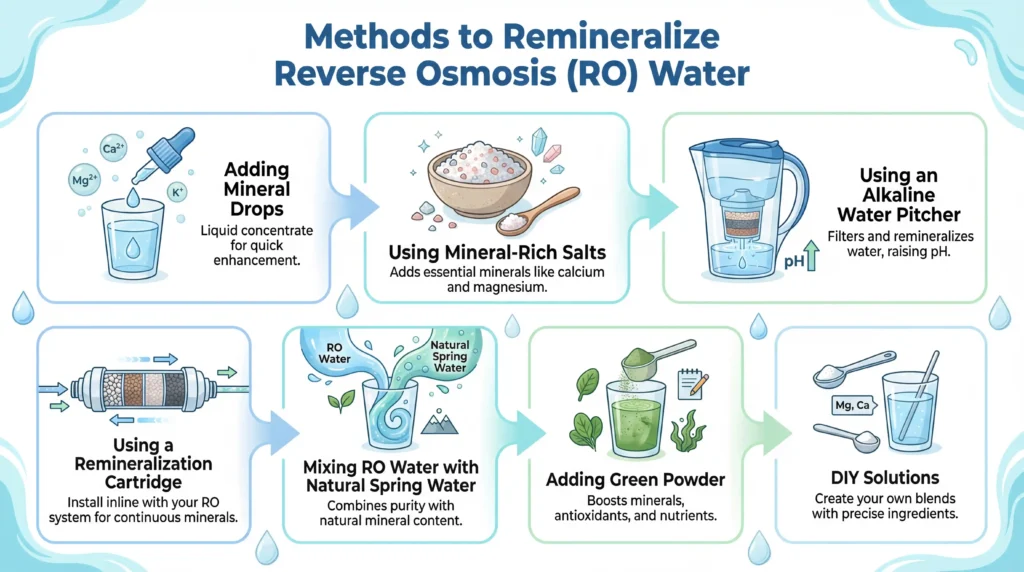 How to Remineralize Reverse Osmosis Water?
At this point, the water is cleaner but still has dissolved solids like calcium and arsenic. Don’t worry—the membrane is about to get real mean.
Step 3: The Membrane Showdown
Now, water hits the RO membrane. This is the heart of the system—a thin, tightly-wound sheet that looks like a roll of wrapping paper you’ll never use. It has pores so small that only water molecules can squeeze through. Imagine trying to pass a beach ball through a keyhole—that’s what contaminants feel like.
The membrane rejects about 95-99% of impurities. It’s basically the Simon Cowell of water filters—harsh, but effective. The clean water goes to a storage tank, while the rejected gunk (called “brine”) gets flushed down the drain. The brine is the water’s way of saying, “Fine, I’ll leave. But I’m taking my calcium with me.”

