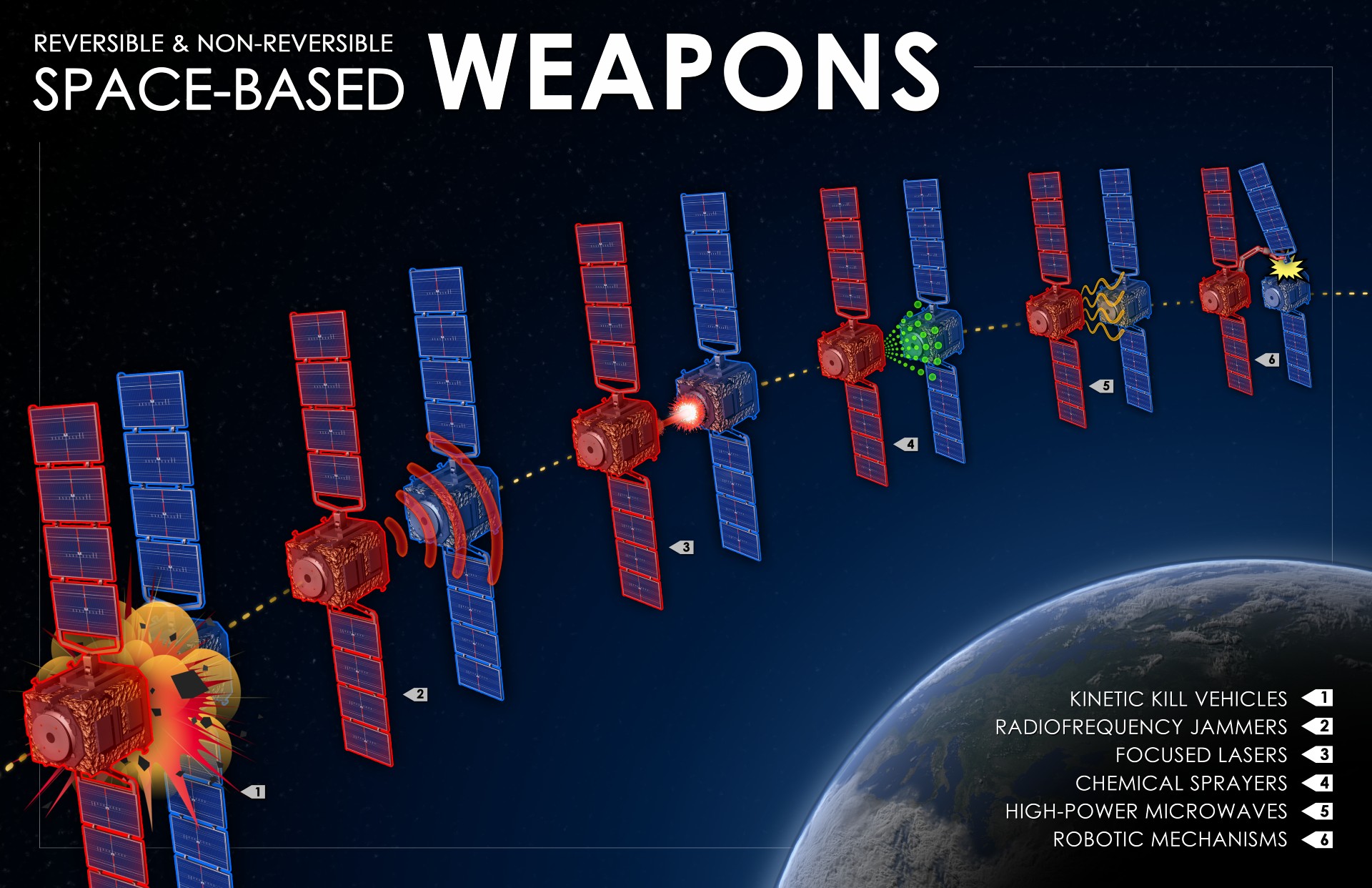
Kinetic space weapons are designed to destroy or disrupt enemy satellites using physical force, like a space-based missile defense system. On the other hand, non-kinetic space weapons use non-physical means to disable or disrupt enemy satellites, such as cyber attacks or electromagnetic pulses. Both types of weapons have their advantages and disadvantages.
The US military is considering using kinetic space weapons to destroy enemy satellites that pose a threat to its national security. However, this approach has its drawbacks, as it could create a lot of space debris and escalate tensions with other countries. I mean, can you imagine the space junk that would be created if we started blowing up satellites left and right?
The Risks of Kinetic Space Weapons
The use of kinetic space weapons could have unintended consequences, such as creating a chain reaction of collisions that would put other satellites at risk. It's like playing a game of space billiards, where one shot could lead to a series of unpredictable outcomes. The US military needs to carefully consider the risks and benefits of using kinetic space weapons.
On the other hand, non-kinetic space weapons offer a more subtle approach to countering enemy satellites. These weapons can be used to disrupt or disable enemy satellites without creating space debris. However, they can be more difficult to develop and deploy, and their effects might be harder to predict.