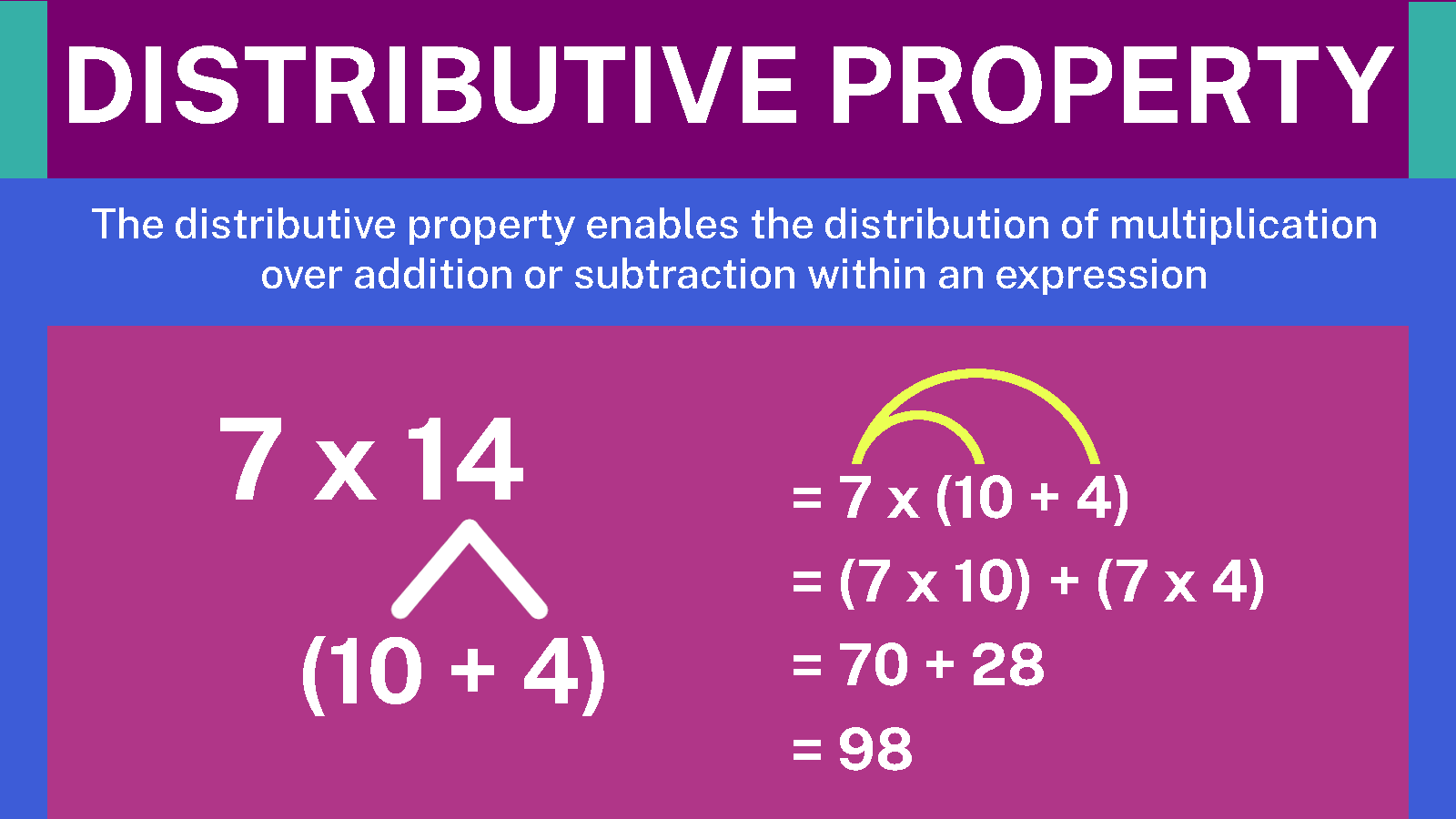
Because math is just a game of rearranging furniture. The distributive property lets you move numbers around without breaking anything. Want to multiply 99 x 5? That’s 100 x 5 minus 1 x 5. 500 minus 5. Easy peasy.
It also makes you look smart at parties. Someone says, “What’s 18 x 7?” You pause, then say, “126. I just did (20 x 7) minus (2 x 7).” Everyone stares. You sip your drink mysteriously.
The distributive property is the reason you can split a pizza bill among friends without crying. It’s the reason you can calculate the area of a weird-shaped garden. It’s the unsung hero of everyday arithmetic.
The Final Punchline
If the distributive property were a person, it’d be that friend who always breaks things down into simpler steps. “Don’t panic, let’s take it one piece at a time.”
It’s friendly. It’s flexible. It’s the Swiss Army knife of multiplication. Use it. Abuse it. Show it off to your friends.
And next time you split a group of items into smaller chunks, give a little nod to this mathematical party trick. You’ve been using it all along. Now you just know the secret handshake.
Go forth and distribute. Math just got a little less scary—and a lot more fun.

