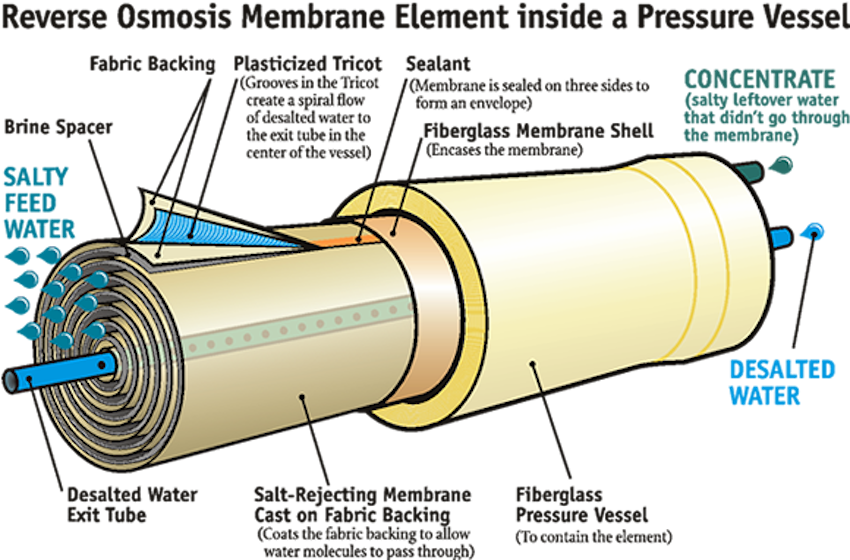
Imagine your tap water is a rowdy nightclub full of different particles. You’ve got the cool water molecules who just want to have a good time, but then you also have the unwanted party crashers: dissolved salts, bacteria, and weird chemicals. Reverse osmosis (RO) is the super-strict bouncer at the door.
This bouncer uses a special membrane with tiny, tiny holes—so small that only water molecules can squeeze through. Everything else gets kicked to the curb. It’s not magic; it’s just physics being a total show-off.
What Gets Filtered? The Villains List
Let’s start with the biggest bad guys. Reverse osmosis is a beast at removing dissolved solids. That includes things like sodium, calcium, and magnesium—the stuff that makes your water “hard” and leaves those annoying white spots on your glasses.
It also tackles heavy metals like lead, copper, and arsenic. Yes, the scary stuff you don’t want in your morning coffee. RO says, “Not today, lead. Not today.”
And don’t forget nitrates and sulfates. These often sneak in from agricultural runoff or old pipes. Your RO system treats them like uninvited guests who brought cheap wine.
The Microscopic Party Crashers
Now for the stuff you really can’t see. Reverse osmosis is a champion at filtering out bacteria and viruses. It’s like a microscopic bouncer with a magnifying glass and a very grumpy attitude.
It removes cyst parasites like Giardia and Cryptosporidium. Those little buggers can cause a very upset stomach, and RO says, “You’re not getting past this velvet rope, buddy.”
Even some dissolved organics and pesticides get the boot. If it’s a molecule bigger than a water molecule, it’s probably getting rejected. It’s surprisingly judgmental for a filter.
 Reverse Osmosis Filter Replacement And RO Membrane Guide (2026)
What It Doesn’t Filter (The Escape Artists)
Okay, let’s be real. No filter is perfect. Reverse osmosis has a few blind spots. It’s not great at removing dissolved gases like chlorine. That’s why most RO systems have a carbon filter before the membrane—to handle the chlorine first.
It also struggles with volatile organic compounds (VOCs) that are smaller than water molecules. Think of them as tiny, sneaky ninjas that slip through the cracks. Again, a good carbon pre-filter usually takes care of them.
And here’s the kicker: RO is so good at filtering that it removes healthy minerals too, like calcium and magnesium. That’s why some people add a remineralization stage to put the good stuff back in. It’s like a very thorough house cleaner who also throws away your favorite mug.