
Think about it: we’ve used these in everything from firefighting foam to your couch’s stain guard. They rinse off, get into water, and once they’re out, they travel. Rain, rivers, even Arctic ice now carries traces of PFAs.
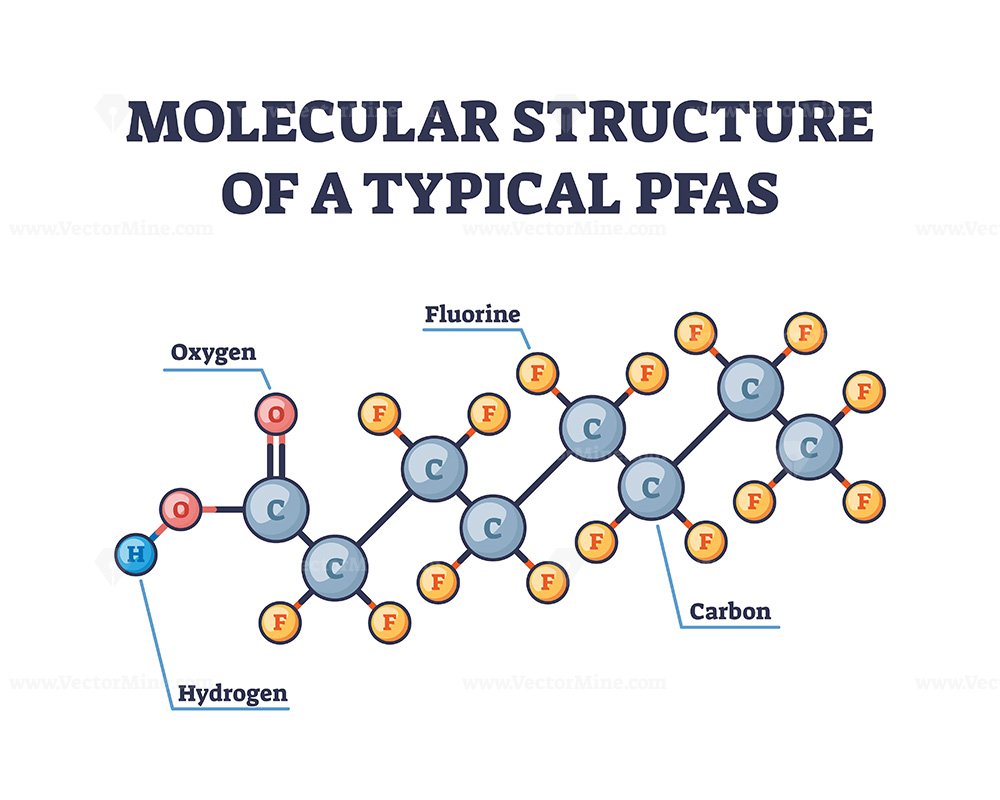 PFAS molecular structure shows carbon-fluorine bonds, illustrating
It’s like we accidentally built a slow-moving, chemical confetti cannon. And because they don’t degrade, they just accumulate. The result? They’re now found in the blood of nearly every person on Earth. Yes, including yours and mine.
Is That Actually Scary?
Honestly, a little bit. Scientists are still studying the effects, but high levels have been linked to some health issues—things like thyroid problems or impacts on immune systems. But don’t panic! For most of us, the tiny amounts are considered low risk.
It’s more of a “let’s be smart about this” situation. Think of it like salt: a little is fine, but a huge pile is a problem. The real issue is that they don’t ever go away, which makes them a fascinating but tricky puzzle for chemists.

