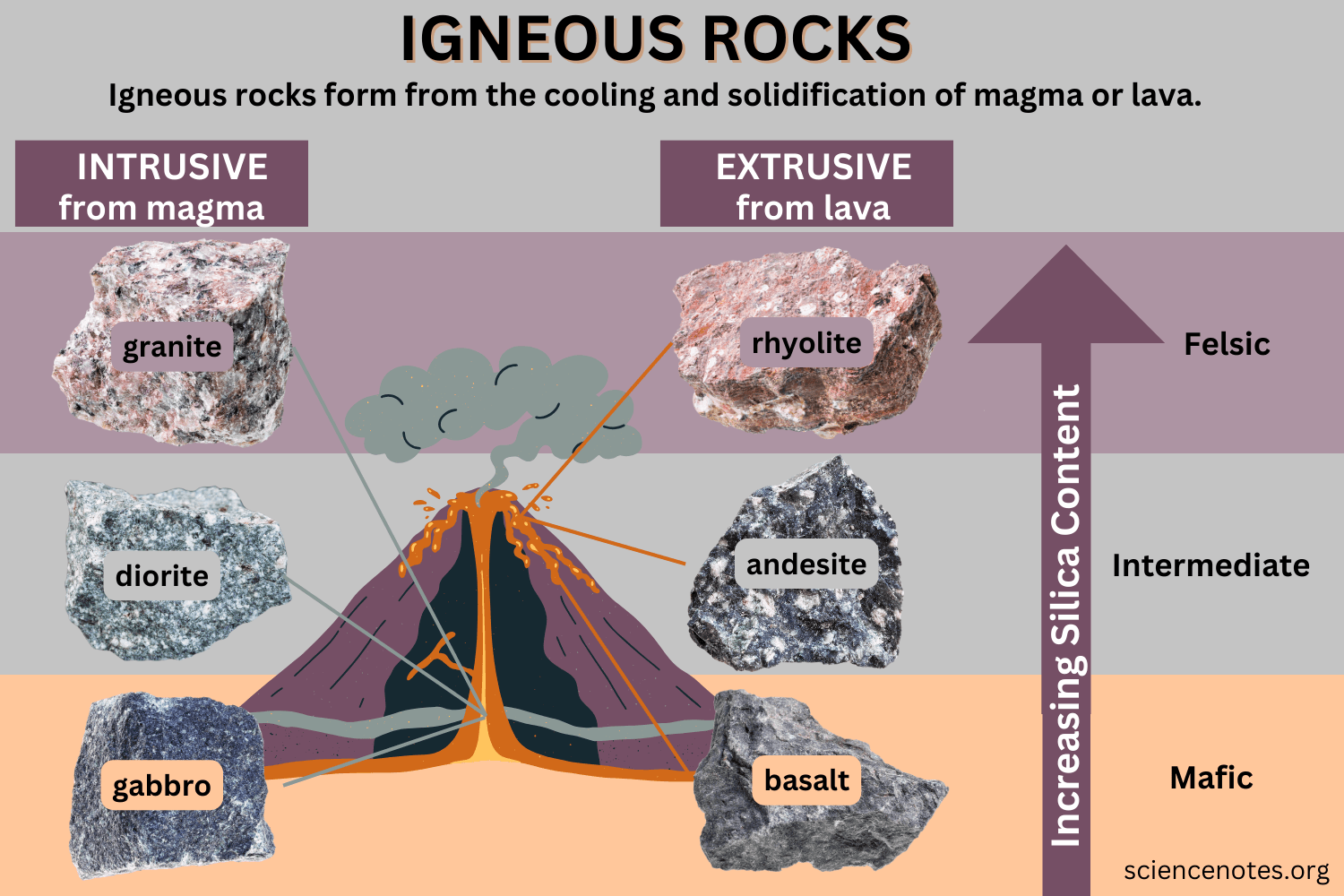
The speed of cooling changes everything. Fast cooling—like lava hitting ocean water—traps atoms in a panic. No time to grow big crystals. You get obsidian, a natural black glass. It’s so sharp ancient people used it for knives.
Slow cooling—like magma sitting miles underground for millions of years—lets crystals grow huge. You get pegmatite, which has crystals the size of your arm. Seriously. Some are as big as telephone poles.
Here’s the weird part: the same chemical recipe can make totally different rocks just by changing cooling speed. Same ingredients, different cooking time. That’s like making a soufflé vs. a brick.
Funky Add-Ins: Gases and Water
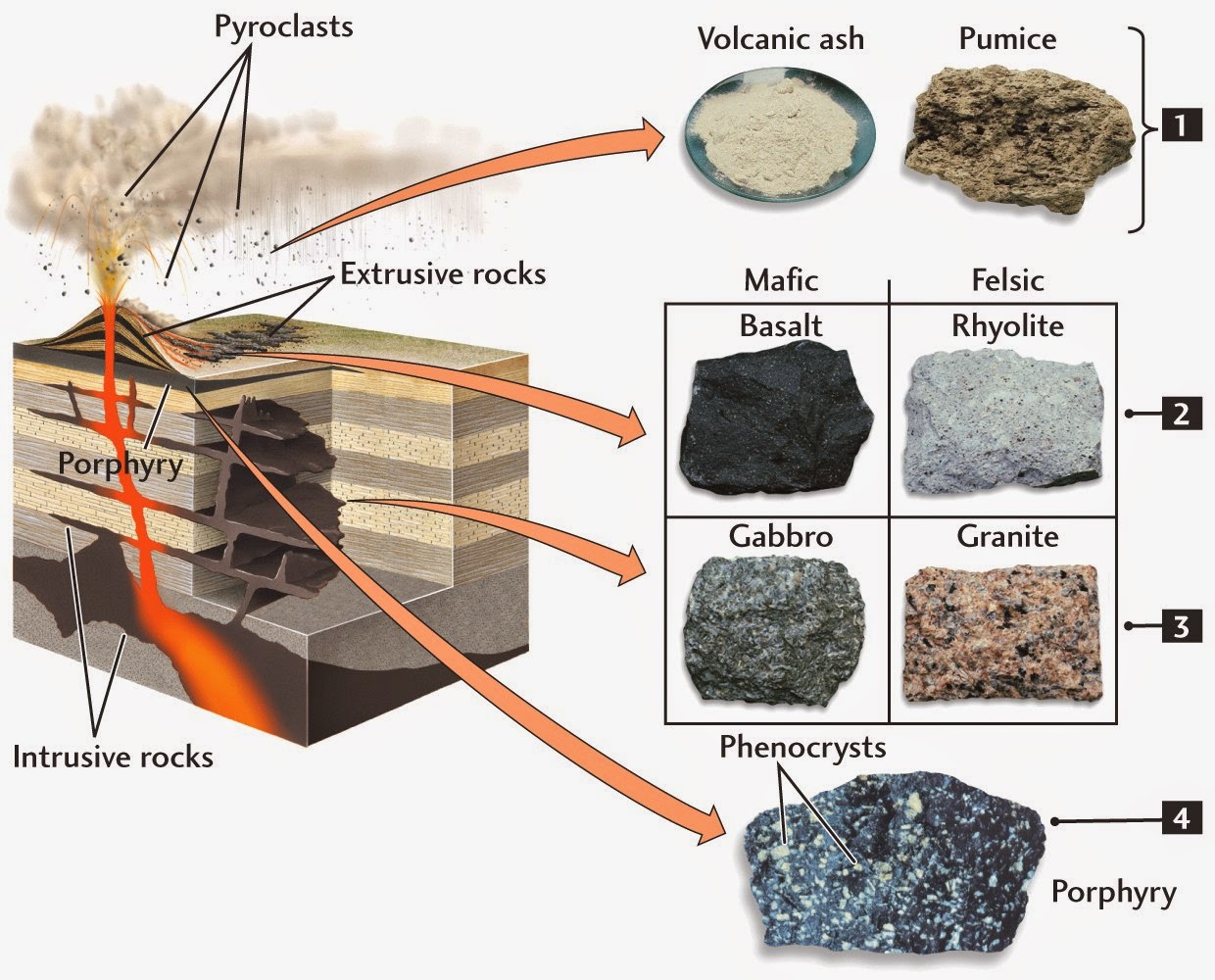
Magma isn’t just liquid rock. It’s full of dissolved gases—water vapor, carbon dioxide, sulfur dioxide. When pressure drops (like during an eruption), these gases bubble out. They create vesicles—little holes in the rock.
Have you ever held pumice? It’s a sponge rock that floats on water. It’s basically frozen, bubbly foam. The holes are from gas trying to escape. Imagine the Earth burping, and that burp becomes a rock that floats in your bathtub. True story.
 Igneous Rocks
Scoria is similar, but darker and heavier. It looks like a black, angry lava rock. Gardeners love it. They put it in plant pots for drainage. Yes, people decorate with solidified lava burps.

