Because you are not a water chemist. Unless you’ve got a home lab and a lot of spare time, you can’t test your tap water every Tuesday. NSF certification hands you the trust on a silver platter. It’s like buying a helmet that says “CPSC certified” for biking—you don’t question it, you just know it’ll save your noggin.
Plus, it saves you money in the long run. A certified filter that actually works means you’re not wasting cash on fancy plastic that does nothing. And let’s be real—plastic waste is bad enough without drinking crummy water through it.
How do you spot the real deal?
Look for the tiny blue circle or the words “NSF certified” right on the box or filter cartridge. But don’t stop there—check the model number against the NSF database online. Some sneaky brands put “tested to NSF standards” but never actually paid for the full certification. That’s like saying you “trained for a marathon” while binge-watching Netflix. Run the number; it takes 20 seconds.
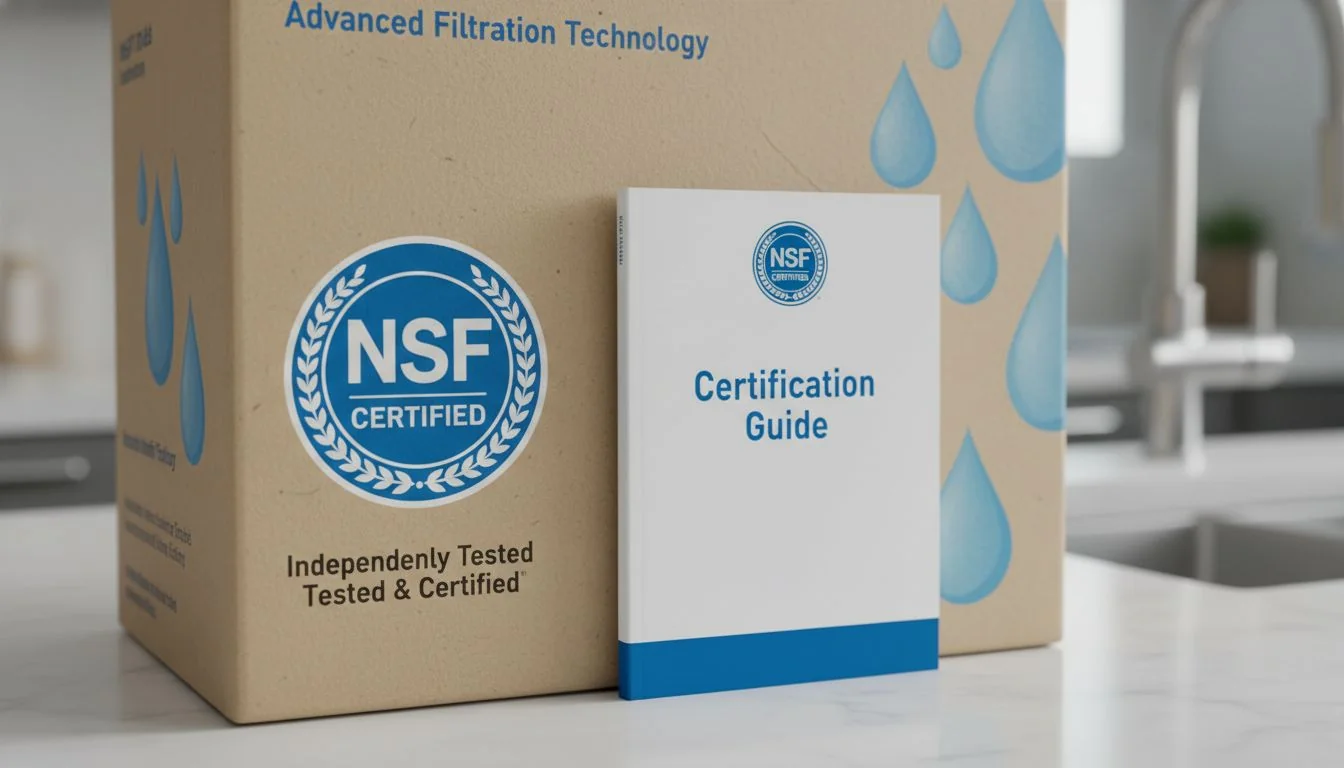 NSF Certification: Boost D2C Water Purifier Trust
And here’s a fun comparison: think of NSF certification as the Michelin star of water filters. Any restaurant can claim to make great pasta, but a Michelin star means a secret inspector came, ate the whole meal, and didn’t get food poisoning. Your water filter’s star tells you the inspector drank the entire tank.