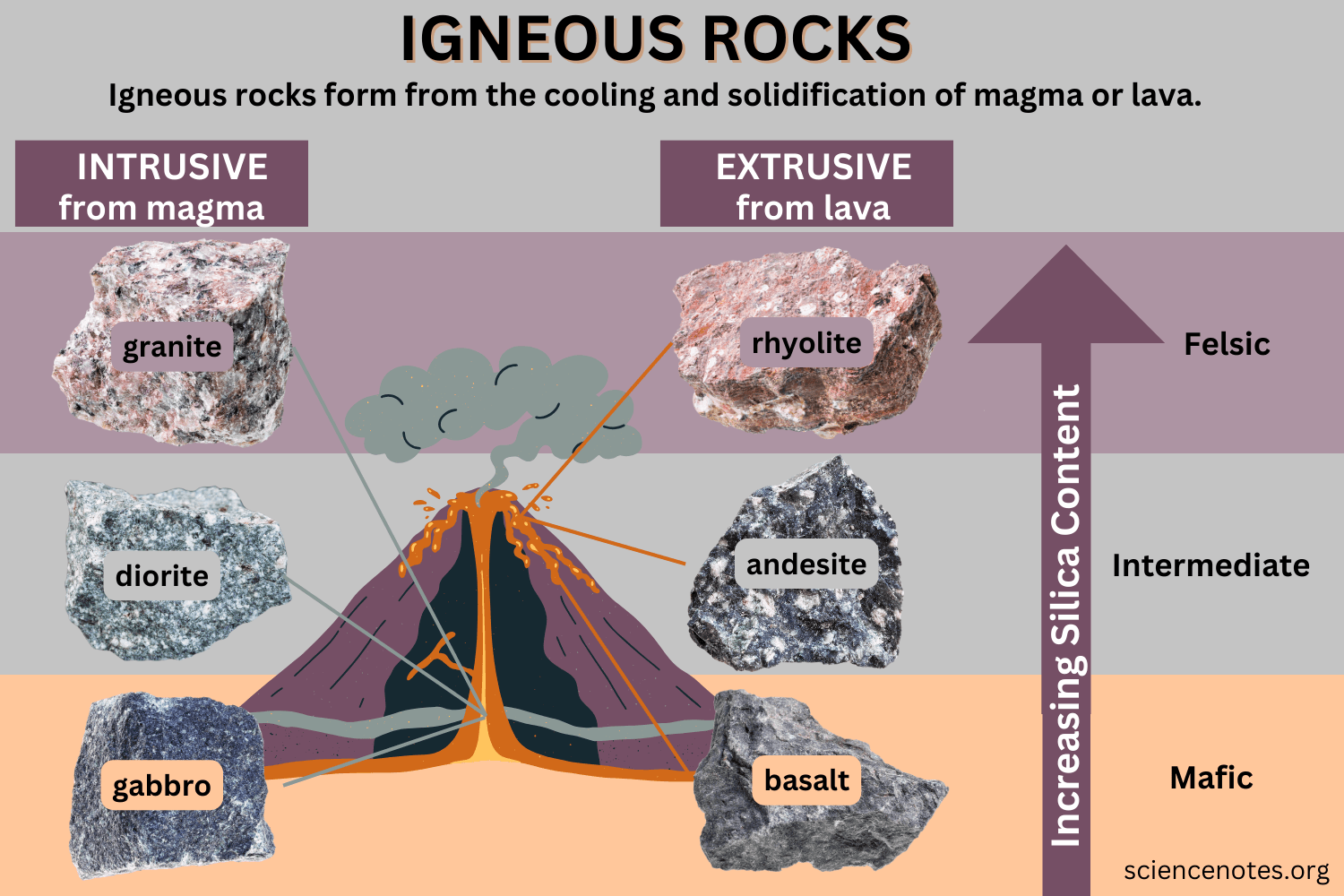
Let’s get one thing straight: igneous comes from the Latin word for fire, ignis. So yes, you are holding fire-turned-stone. How cool is that?
It all starts deep underground, where temperatures climb so high that solid rock turns into magma. Think of it as Earth’s hot, gooey lava-lamp juice, but way more powerful.
Then, the magic happens. That magma either erupts onto the surface as lava, or it stays put and cools inside the Earth. The speed of that cooling is the secret ingredient that makes all the difference.
Two Kinds of Attitude: Extrusive vs. Intrusive
Extrusive rocks are the sprinters. When lava hits the air or ocean, it cools so fast that mineral crystals barely have time to form. You get fine-grained or even glassy rocks, like obsidian—a black, shiny rock that ancient people used to make knives sharp enough to shave with. Imagine a rock that does double duty as a murder-mystery prop!
On the flip side, intrusive rocks are the slow-cookers. They cool miles underground, taking thousands or millions of years. Big, slow crystals get time to grow. That’s why granite looks speckled—you can see the quartz and feldspar crystals with your naked eye. It’s like a geological snowflake, but way tougher.

