The story starts in 1970, not with deep cultural meaning, but with a random disaster. A group of foreigners living in Japan wanted turkey for Christmas but couldn’t find one anywhere. So, they bought KFC chicken (because, hey, it’s close enough). A store manager noticed this and thought, “Wait a minute—I smell opportunity.”
Fast-forward to 1974, and KFC Japan launched a campaign: “Kurisumasu ni wa Kentakkii!” (Kentucky for Christmas!). The idea was pure genius: sell a “party barrel” that mimicked the American turkey dinner. No one asked if it made sense culturally—they just decided it did. And guess what? It worked like a charm. (Side note: this is also why I’m convinced advertising can sell you a rock if you call it a “pet.”)
The “No Turkey? No Problem” Factor
Here’s the thing: Japan desperately wanted to celebrate Christmas as a fun, romantic, Western-style holiday. But they had one huge problem: turkeys were basically nonexistent in 1970s Japan. They were expensive, hard to cook, and nobody’s grandma had a recipe for stuffing. So KFC simply said, “You know what’s also a large bird? A chicken. And it’s already fried and comes with a toy.” The logic was so simple it was almost poetic.
And let’s be real—who wants to roast a turkey for hours when you can buy a perfectly crispy bucket of thighs? The Japanese love convenience and presentation. KFC’s Christmas meal is served in a special festive box with cake, so it feels “fancy.” It’s the gastronomic equivalent of wearing a tuxedo t-shirt to a gala: tacky, but very committed to the bit.
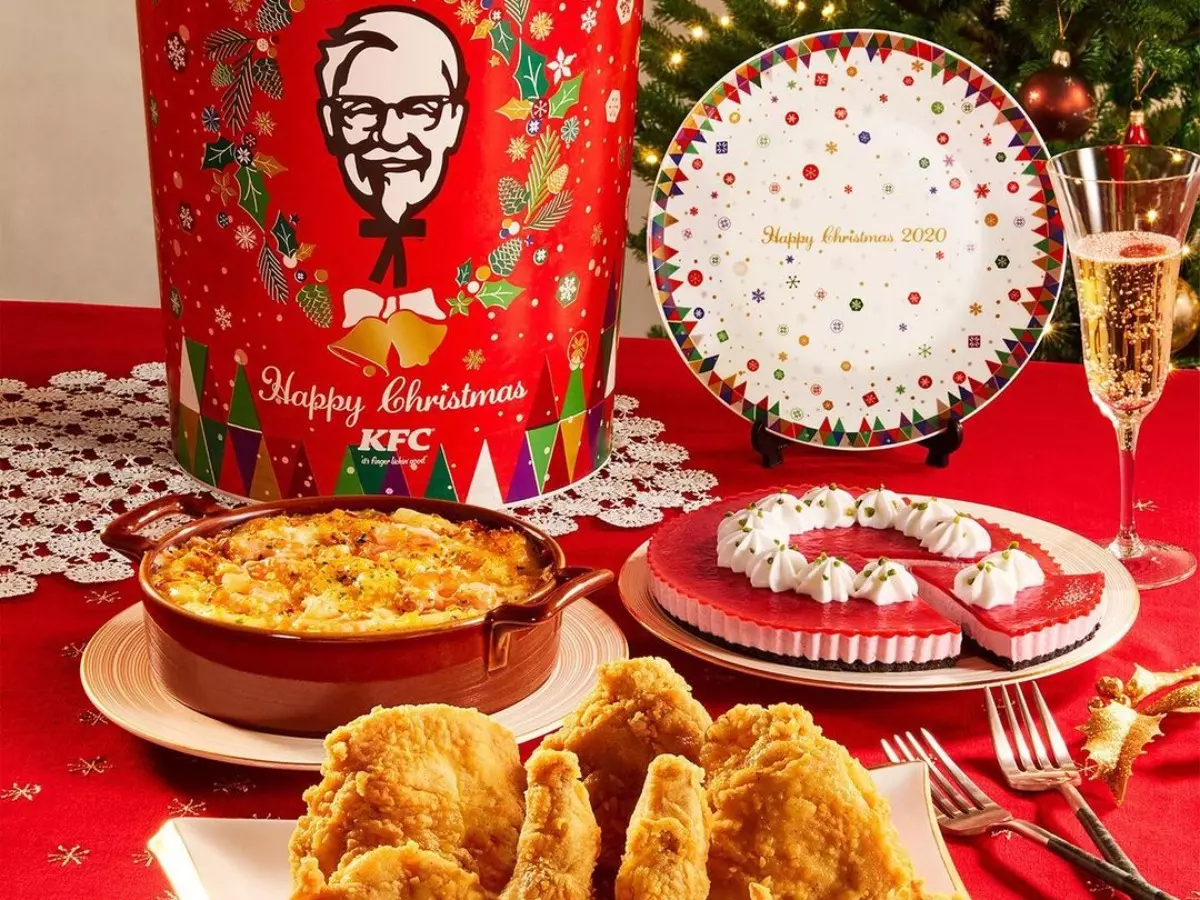 The Tradition Of Eating KFC On Christmas In Japan